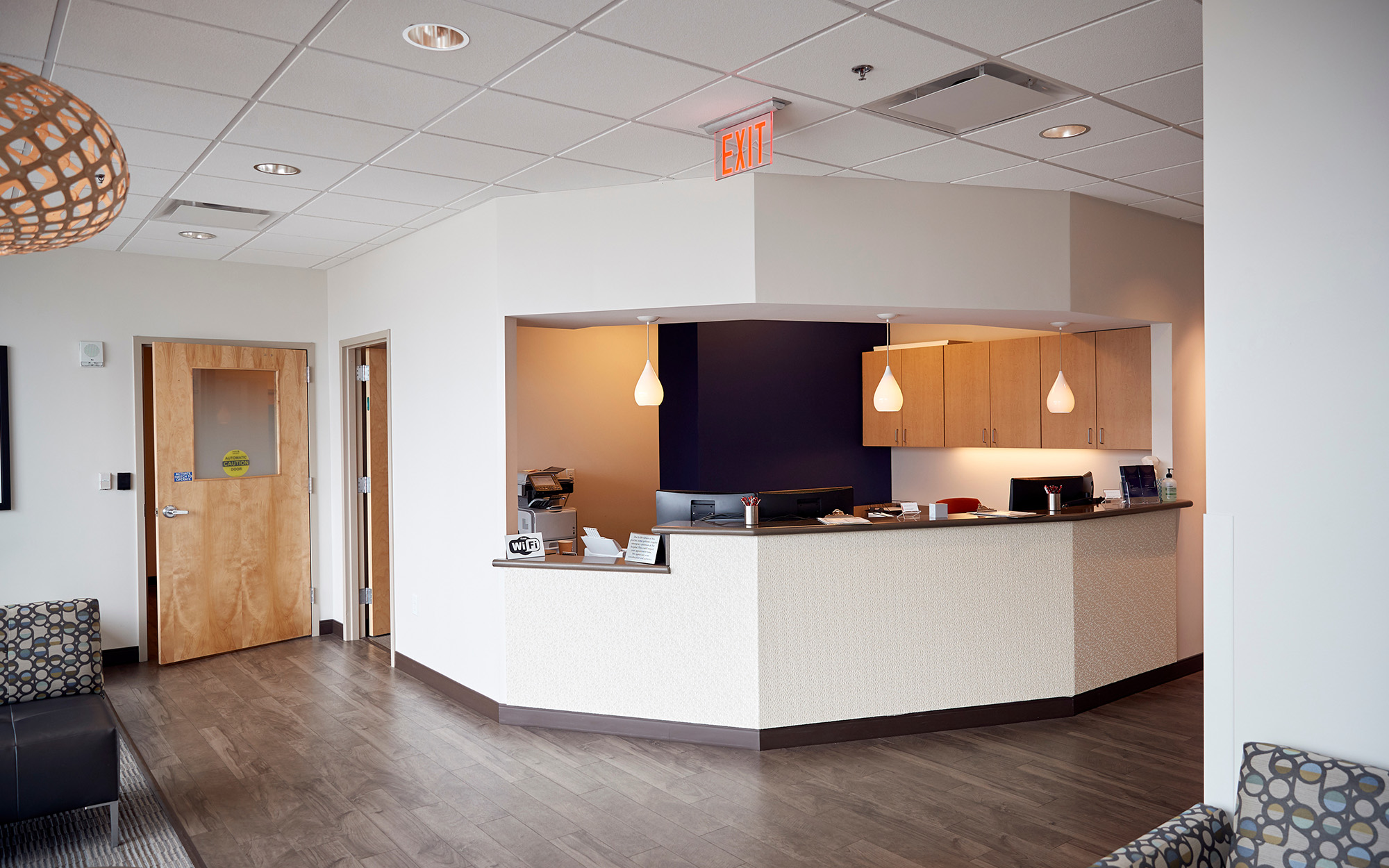
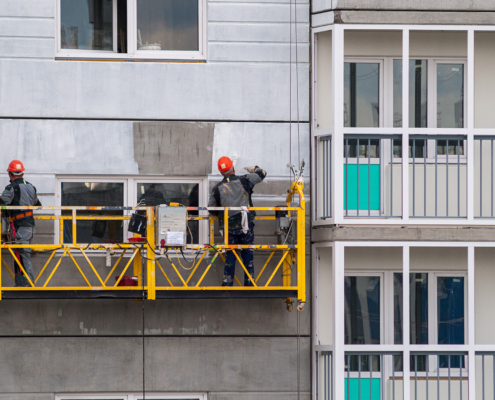
Standard interior commercial painting processes are not appropriate for occupied clinical environments. VOC emissions from conventional products are unacceptable in patient care areas, procedure rooms, and anywhere near immunocompromised individuals. Low-VOC and zero-VOC systems are required specifications, not preferences, and the contractor needs to verify product compliance for each zone of the facility.
Infection control during active healthcare painting follows an Infection Control Risk Assessment (ICRA) framework. The American Society for Healthcare Engineering provides the standard used across most hospital systems to classify construction activity and define the required containment, ventilation, and access controls for each work zone. Barriers, negative air pressure in higher-risk zones, and dust containment are part of the scope. Coordination with the facility’s infection control officer is a standard expectation on hospital projects.
Scheduling in healthcare environments means building around patient care delivery. Certain wings, floors, and procedure suites can never fully close. McSweeney’s ability to run after-hours and weekend crews and manage phased access plans across multiple work zones is what makes active-facility painting manageable without operational disruption.
Antimicrobial coatings are commonly specified for high-contact surfaces in clinical corridors, nurse stations, and patient rooms. High-sheen washable finishes allow housekeeping staff to clean walls regularly without breaking down the coating over time. Medical office painting typically carries more scheduling flexibility, but the expectation for low-VOC, durable, and washable finishes is consistent across the healthcare vertical.